
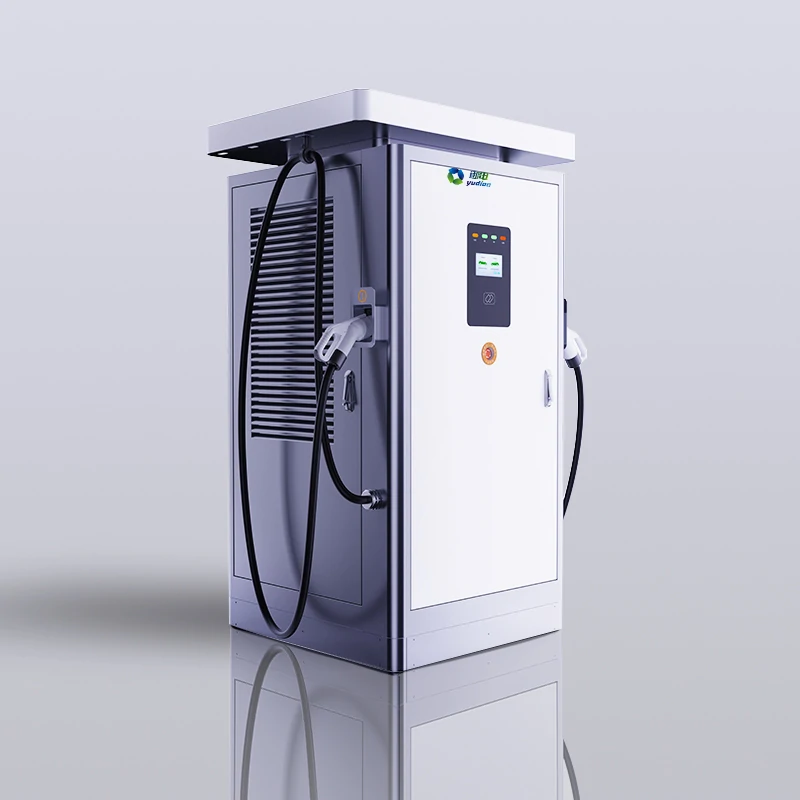
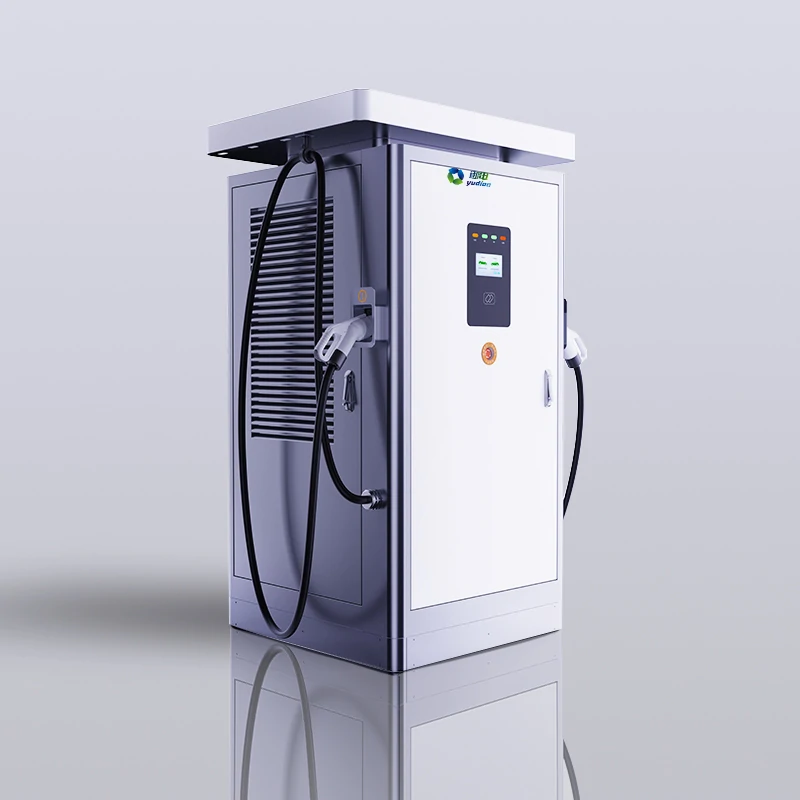
DC charging station 360KW
¥7,985.92
Scope of application
DCP-D360 electric vehicle DC fast charger is mainly used for fastcharging of electric passenger cars. It is suitable for installation in electric vehicle chargingand swapping stations, public parking lots,residential parking lots, large commercial buildingparking lots,etc., and can provide DC power for electric vehicle power batteries. Electricvehicles that meet the GB/T 20234.3 charging interface design standard and thevehicle-mounted BMS system designed according to the GB/T 27930 standard are allowed touse this product for charging operations.
1 Summary
1.1 Model Description
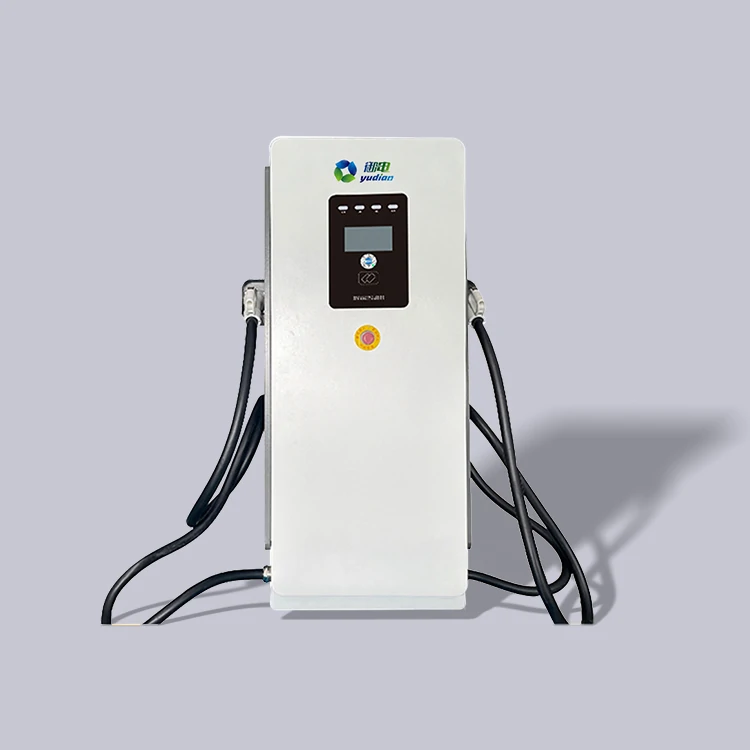
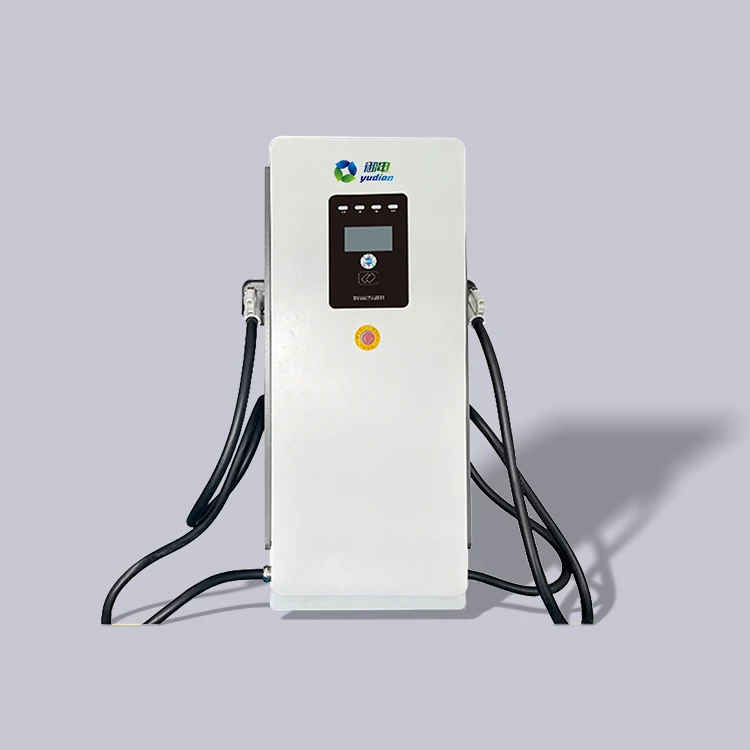
DCP: DC fast charger, this series of chargers are integrated double-gun DC chargers.
D360: Rated output power of charger.
1.2 Product Overview
DCP-D360 series electric vehicle DC charger is a product that canprovide national standard charging interface and safe and reliable charging services, has gooduser experience, meets the functions of accurate metering and billing, charging record storage,consumption checkout, and has certain configuration capabilities and is easy to debug. Itmainly has 7 functional units: AC distribution unit, power conversion unit, DC output unit,charging interface, charging control unit, billing authentication unit, and user terminal.
Usage environment
1) Ambient temperature: Normal working temperature -25C~ +55 C, storage temperature-30C~+70C;
2) Altitude2000m;
3) Relative humidity: 5%~95%, no condensation;
4) Working position: Vertical installation, maximum slope not more than 5 ;
5) The place of use should have facilities to prevent wind, sand, rain and snow; no corrosive gas;no explosive gas environment;
6) The place of use is not allowed to have strong vibration and impact.
1.3 Performance parameters
Table 1-1 DCP-D360 electric vehicle DC fast charger performanceparameters.
| Project | Technical indicators | |
|---|---|---|
| Product model specifications | DCP-D360 | |
| Input characteristics | Input Voltage | AC380V(1±15%) Three-phase five-wire |
| AC frequency | 50±1Hz | |
| Power Factor | ≥ 0.98 | |
| Current harmonic distortion | THDi ≤ 5% | |
| Full load efficiency | ≥ 96% | |
| Output characterlstics | Rated output power | 360kW |
| Output voltage range | DC200-1000V | |
| Output current range | Single circuit: O-250A | |
| Current limiting adjustment range | 20%~100% Rating | |
| Voltage stabilization accuracy | ≤ ±0.5% | |
| Steady flow accuracy | ≤ ±1%(Current range 20%-100% load) | |
| Ripple factor | Effective value coefficient:≤ 0.5% | |
| Protection features | Input over-voltage protection | When the input voltage is higher than the over-voltage protection setting value, the charger can automatically protect |
| Input under-voltage protection | When the input voltage is lower than the under-voltage protection setting value, the charger can automatically protect | |
| Output over-voltage protection | When the output voltage exceeds the over-voltage setting value, the charger can automatically protect | |
| Output short circuit protection | When the output is short-circuited, the charger can automatically protect itself and automatically recover when the fault point is removed. | |
| Over temperature protection | When the internal temperature of the charger exceeds theover-temperature setting value, the charger can automatically protect | |
| Communication protection | Shutdown of electric vehicle communication failure | |
| Human Machine Interface | Status indicator | Displays standby, charging and fault status |
| Human machine operation unit | Equipped with 8-inch LCD touch screen: display charging information, battery information, human-machine operation interface | |
| Others | Vehicle Auxiliary Power Supply Specifications | DC 12V/10A |
| Operating ambient temperature | -25℃ - +55℃ | |
| Cooling method | Forced air cooling | |
| Acoustic noise | ≤65 dB | |
| Protection level | IP54 | |
| Size (mm) | 360KW:2017 (Height)*980(Width)*1064(Depth) (Top width 1230mm) | |
2 Features
2.1 Basic functions
1) The charger can charge one or more of the following batteries: lithium-ion batteries,nickel-metal hydride batteries, lead-acid batteries, suitable for common electric vehiclemodels;
2) The human-machine interface is a full touch screen operation mode, which is convenient andfast to operate. The charger also has a working status indication function, and the operatingstatus of the charger can be easily observed through the light on the top of the charger;
3) It has functions such as card encryption, metering and billing,background communication,and electric vehicle communication.
2.2 Safety protection function
1) The charging equipment has protection functions such as input over-voltage, inputunder-voltage, output over-voltage, output short circuit, and charger over-temperature. Whena fault occurs, the charger can automatically cut off the output and have an alarm prompt toprotect charging safety in all directions;
2) The charger has the functions of isolating the output circuit from the power grid, insulationdetection, residual pressure discharge, connection confirmation, polarity detection,communication interruption protection,etc., to ensure the safety of equipment and personnelduring charging;
3) The charger has an emergency stop switch. In an emergency, The power supply can bequickly cut off and charging can be stopped through the emergency stop button;
4) The charger communicates with the vehicle BMS system to monitor the charging status of thepower battery in real time. When there is a fault alarm such as power battery overcharge,over-temperature or battery polarity reverse connection, charging can be stopped quickly toensure the safety of vehicle equipment and power battery;
5) The charger has obvious status indication and text prompts to prevent personnel frommiss-operation;
6) The charger is allowed to start the charging process only after it is correctly connected to theelectric vehicle power battery system; when the charger detects that the connection with theelectric vehicle power battery system is abnormal, if there is an abnormal connection duringthe charging process, the charger can stop charging, disconnect the DC output circuit, andthen unlock the electronic lock. With this interlocking function, the vehicle is not startedbefore being separated from the electric vehicle.
2.3 Metering consumption function
1) The charger is equipped with a DC watt-hour meter, which has the function of measuring thecharging power;
2) By inputting the time-sharing power, the internal conversion power billing is realized, and thecharging fee is collected and settled by output;
3) It has the function of consumption settlement through payment methods such as chargingcards and QR code scanning, but in general, the card swiping operation is only used bymanagement personnel and equipment operation and maintenance personnel for themaintenance and temporary start-up of charging facilities, and the charging management cardis not issued to customers.
2.4 Communication function
1) The charger has the function of communicating with the electric vehicle battery managementsystem BMS to determine whether the charger is correctly connected to the electric vehiclebattery system; obtain the charging parameters and real-time charging data of the electricvehicle battery system;
2) The charger also has the function of communicating with the upper-level monitoring systemto upload information such as power, fees, IC cards, etc, to remote monitoring, and acceptremote monitoring control at the same time.
2.5 History recording function
The charger has the function of recording on-site data when the power is off, which canprevent the phenomenon of losing charging data due to accidental power off, and mainlyrecords the following data.
1) Record the name and start time of the most recent alarm event;
2) Record the name and start time of the most recent fixed value modification event andcharging event.
评价
目前还没有评价