
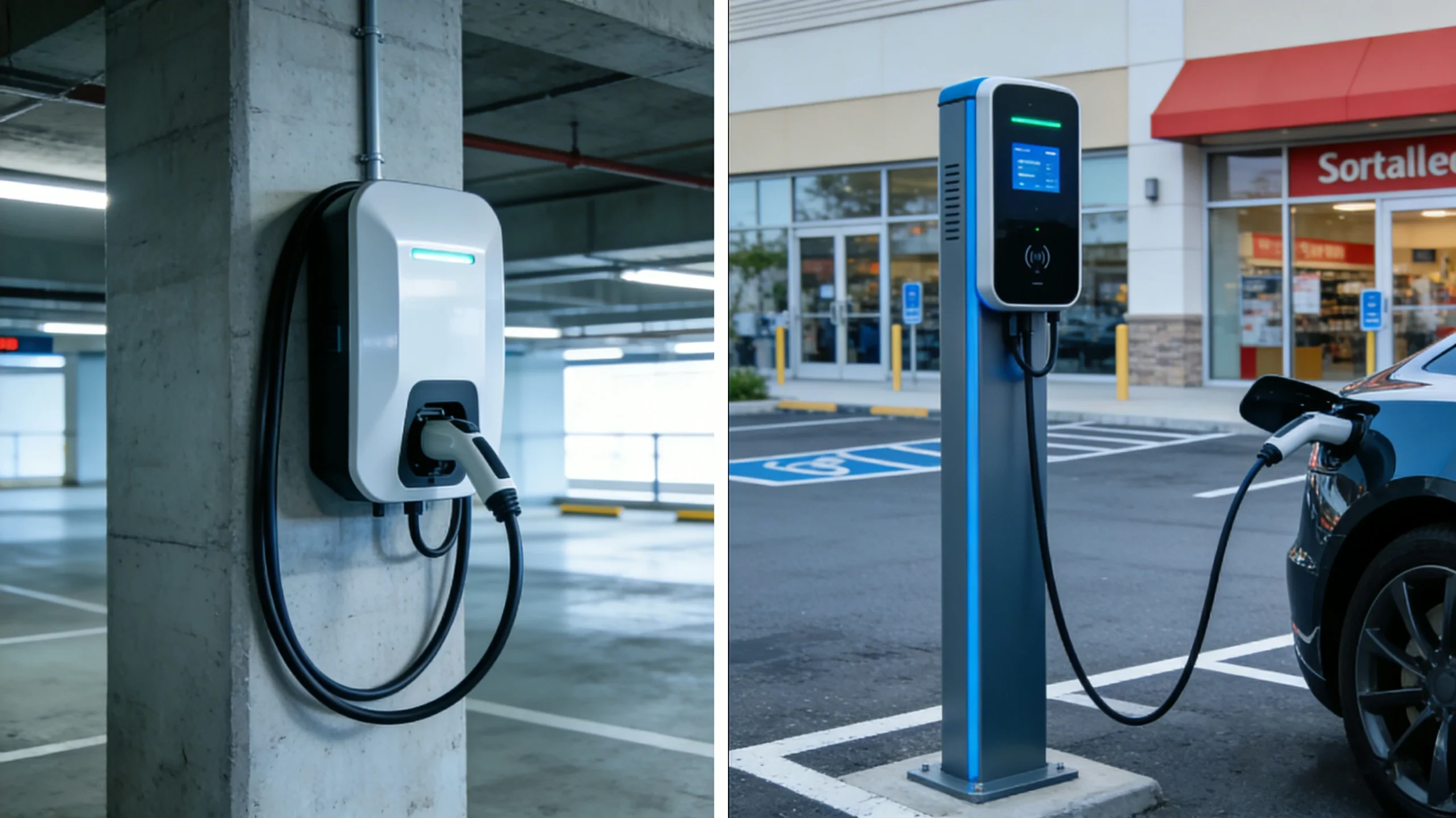
As commercial properties—from retail centers to corporate offices—race to provide EV charging, one of the first infrastructure decisions is the physical mounting style. Should you opt for the space-saving Wall-mounted (Wallbox) units or the high-visibility Pedestal (Floor-mounted) stations?
This decision is a critical part of building a future-proof network. For a deeper look at the entire setup process, check out our Ultimate Guide to Commercial EV Charging Infrastructure. In this specific guide, we break down the pros and cons of mounting styles to help you maximize your ROI.
Wall-mounted EV Chargers: Efficiency & Cost-Savings
Wall-mounted chargers, often called “Wallboxes,” are the go-to for indoor garages or parking slots adjacent to building structures.
The Pros:
-
Lower Installation Cost: Minimal electrical conduit is needed when mounting directly to building walls.
-
Space Preservation: They keep walkways clear and reduce the risk of vehicle collisions.
-
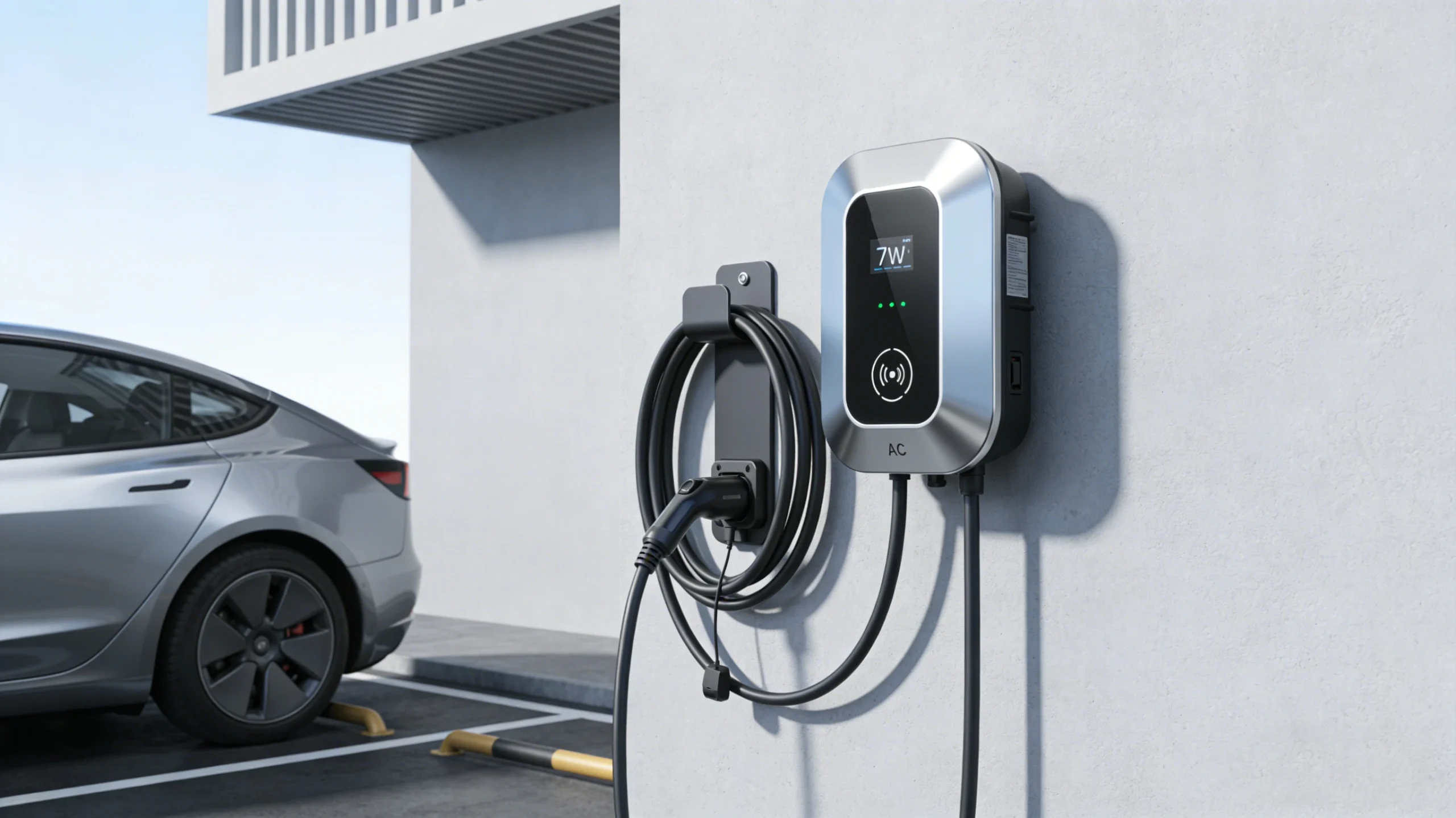
Faster Deployment: Our popular 7kW AC EV Charger is perfect for workplace parking where cars are typically stationary for 4+ hours, offering a cost-effective way to scale charging ports.
The Cons:
-
Fixed Location: Restricted to parking spots near structural walls.
-
Limited Visibility: Harder for visiting drivers to spot in a large, open lot.
Pedestal EV Chargers: High-Speed Turnover & Visibility
Pedestal units are freestanding stations anchored to the ground. They are the standard for open-air parking lots and premium commercial charging hubs.
The Pros:
-
Strategic Placement: They can be placed in the center of a parking row, allowing one station to serve multiple stalls.
-
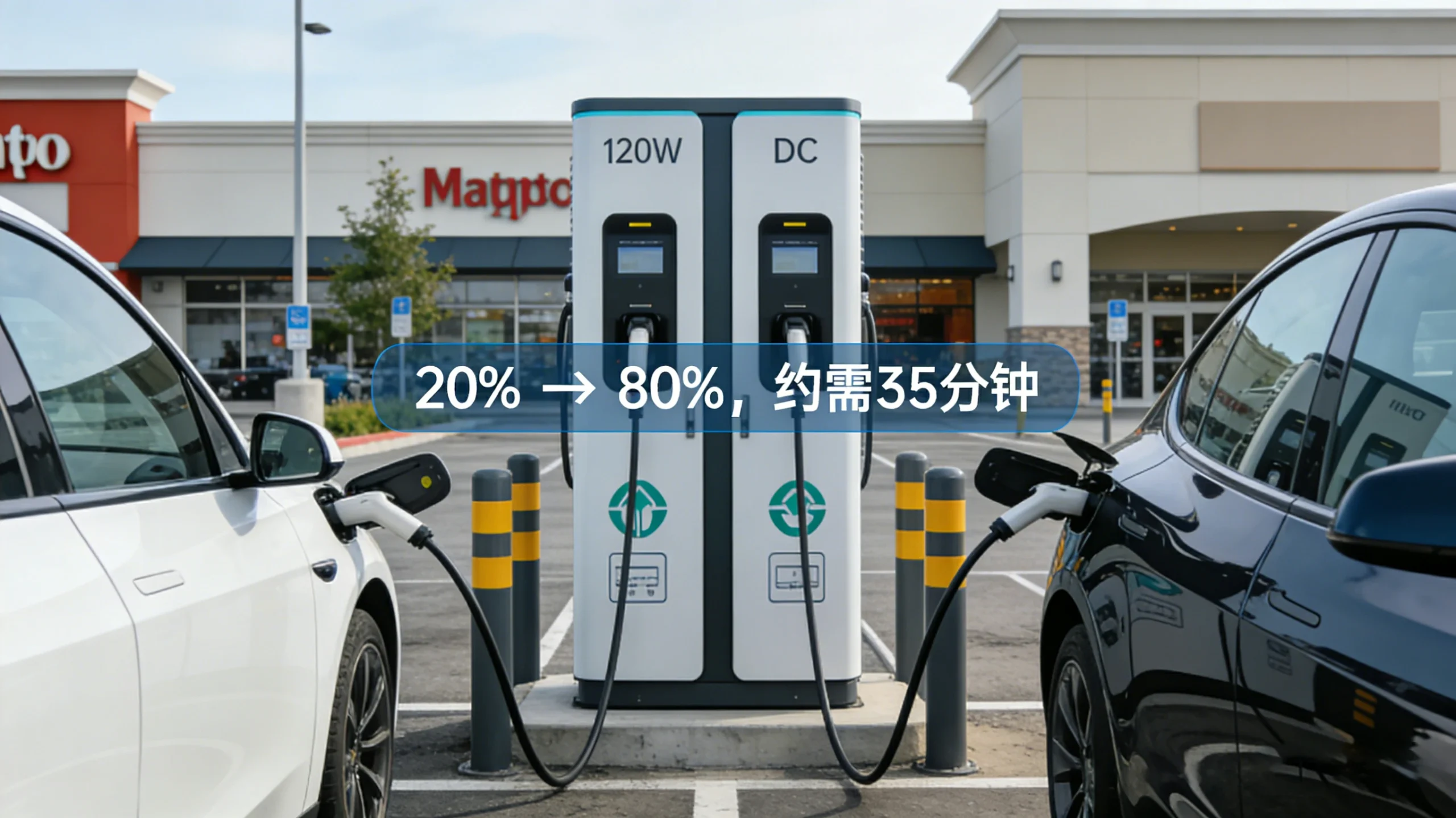
Industry-Leading Performance: For sites requiring high vehicle rotation, the 120kW DC EV Charger is the industry “sweet spot.”
Expert Insight: Most modern passenger EVs are designed to accept power levels that make a 120kW output ideal. This allows a typical vehicle to go from 20% to 80% charge in approximately 35 minutes, matching the average time spent at a shopping mall or restaurant.
-
Dual-Port Efficiency: Pedestal models often feature dual-ports, doubling your site’s earning potential by serving two vehicles simultaneously.
Head-to-Head Comparison (B2B Decision Matrix)
| Feature | Wall-mounted (Wallbox) | Pedestal (Freestanding) |
|---|---|---|
| Typical Installation Cost | Low ($) | Moderate to High ($$$) |
| Charging Speed | 7kW - 22kW (Slow to Mid) | 60kW - 160kW+ (Ultra-Fast) |
| Civil Works Required | Minimal (Drilling) | Substantial (Trenching/Concrete) |
| Ideal Scenario | Underground Garages, Private Fleet | Public Parking, Retail Hubs, Curbside |
| yd-evcharger Recommendation | AC Series | DC Series |
Critical Factor: Total Cost of Ownership (TCO)
While a pedestal installation might cost more upfront due to trenching, the ROI is often superior for commercial operators. Because the 120kW output matches the battery capacity limits of the majority of passenger cars, it ensures a fast 35-minute user experience. This high turnover rate means you can serve more customers per day, leading to a much faster payback period for your infrastructure investment.
Build for the Future with yd-evcharger
There is no “one-size-fits-all” answer. The best choice depends on your site’s traffic and turnover needs. For high-traffic retail or logistics hubs, the efficiency of a pedestal unit is unmatched.
Ready to optimize your parking lot? [Contact yd-evcharger engineers for a custom site layout plan →] [Browse our full range of hardware at www.yd-evcharger.com]
FAQ
Q1: Do pedestal chargers need special protection?
Yes. Unlike wall units, pedestals are “islands.” yd-evcharger strongly recommends installing steel bollards to prevent accidental vehicle impact.
Q2: Is a 120kW DC charger too powerful for small EVs?
No. The charger and the car “communicate.” The system will automatically provide the maximum power the car can safely handle, ensuring a safe and optimized charge for every vehicle type.
Q3: Which mounting style is better for extreme weather?
Both are IP54/IP65 rated. However, pedestals in open lots are more exposed to UV rays, so we apply high-grade anti-UV industrial coatings to our pedestal housings to prevent aging.
Q4: Is trenching for pedestals worth the cost?
If you are building a new parking lot, yes. Laying the conduit during construction is cheap. Retrofitting an existing lot is where costs rise, making wall-mounted units more attractive for older buildings.
Q5: Which mounting style is better for ADA (Accessibility) compliance?
Pedestals are generally better as they allow for more clearance around the vehicle, making it easier for users with mobility aids to reach the charging cable.