
In 2026, the profitability of an EV charging station is determined by one factor: Utilization Efficiency. Buying too much power for a slow-turnover site wastes capital (CapEx), while buying too little power for a high-traffic site leads to lost revenue.
At yd-evcharger, our portfolio covers the entire spectrum of power needs. This guide analyzes the financial performance of four distinct investment tiers. For a broader look at market entry, see our Ultimate Guide to Commercial EV Charging Infrastructure.
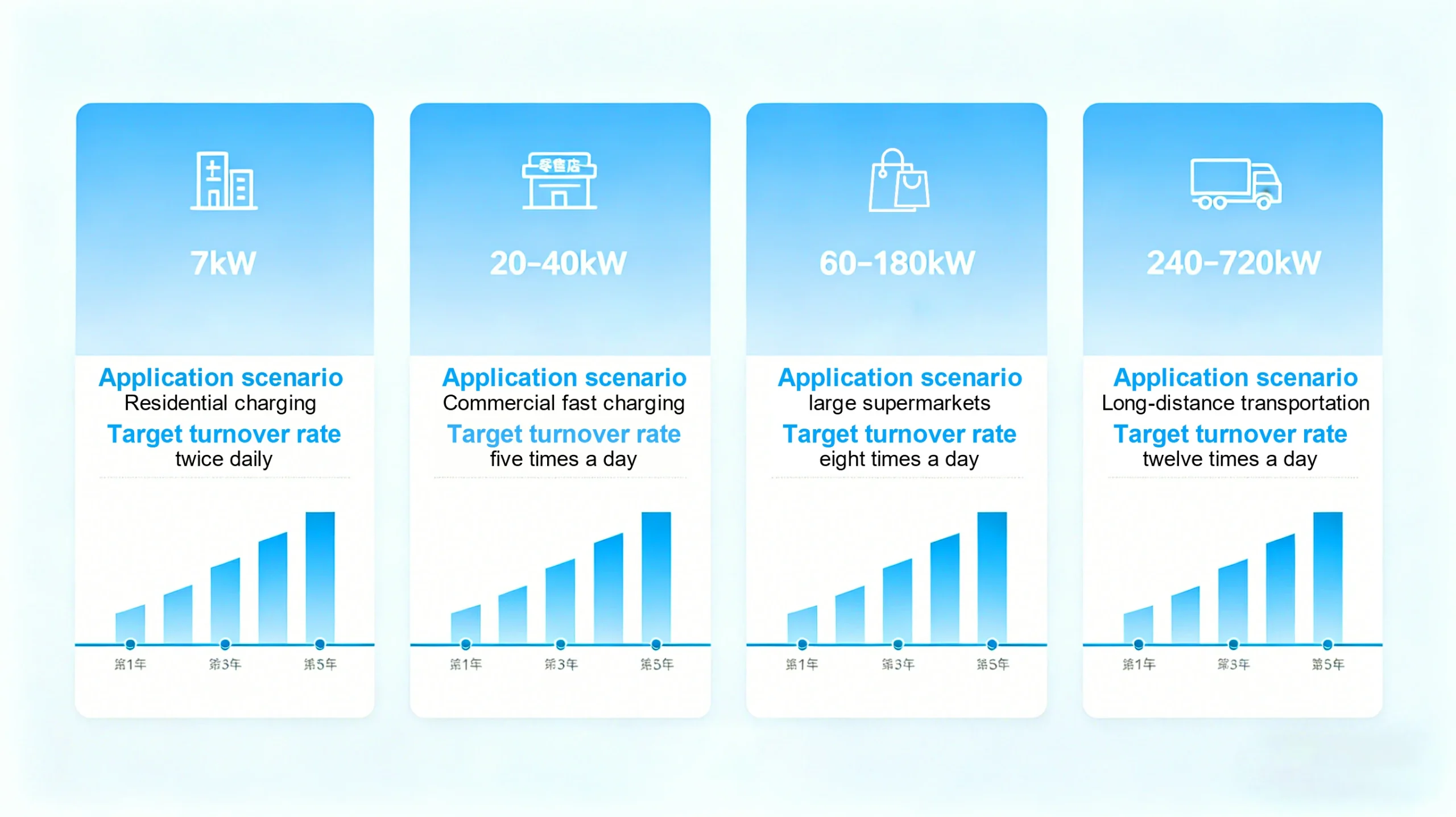
Tier 1: Destination Charging (7kW AC)
Designed for long-dwell locations like apartments, corporate offices, and hotels.
-
Investment Profile: Lowest entry cost. It requires minimal grid upgrades and zero specialized cooling.
-
ROI Logic: The 7kW AC EV Charger focuses on “Volume over Margin.” By installing 20+ units in a parking garage, you build a steady, recurring revenue stream from overnight or workday charging.
-
Payback Period: 12–18 months, primarily driven by parking surcharges and basic service fees.
Tier 2: Low-Power DC Commercial (20kW – 40kW)
The bridge between AC and high-speed DC, ideal for car dealerships, small retail, and private fleets.
-
The Advantage: Provides a 1–2 hour “top-up” experience.
-
ROI Logic: These units are often used as “Complimentary Services” that drive high-value foot traffic. While the direct charging profit is moderate, the increase in dwell time and customer loyalty offers a significant indirect ROI.
Tier 3: The Urban Gold Standard (60kW – 180kW)
This is the most competitive tier for shopping malls, public parking hubs, and gas station retrofits.
-
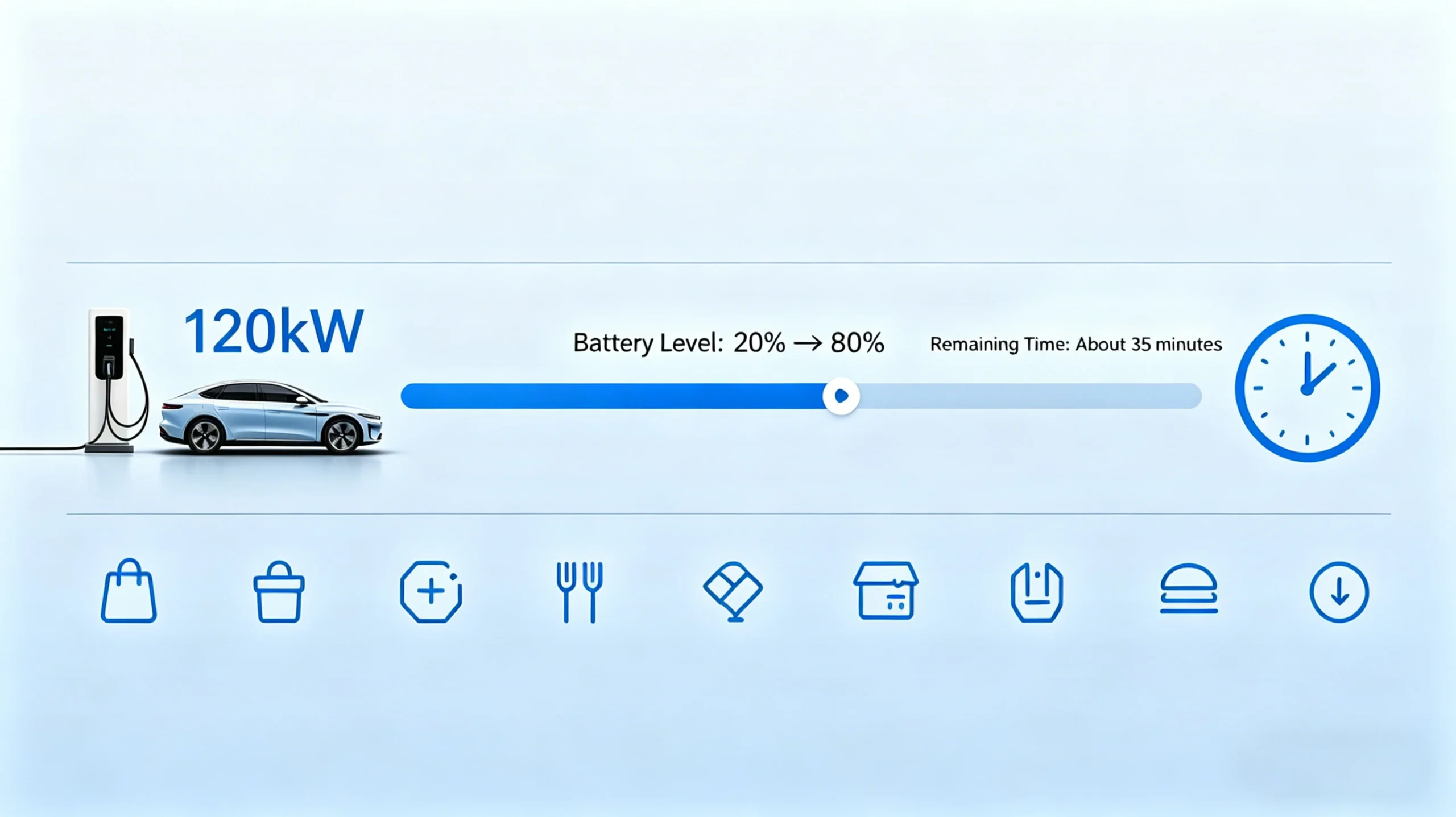
The 120kW/160kW Sweet Spot: Our 120kW DC EV Charger remains the most requested commercial unit globally.
The 35-Minute Rule: A 120kW output aligns perfectly with the battery reception limits of modern passenger EVs, delivering a 20% to 80% charge in roughly 35 minutes. This matches the natural dwell time of a restaurant visit or supermarket trip, ensuring maximum stall turnover.
-
Payback Period: 18–24 months in high-traffic urban areas.
Tier 4: Ultra-Fast & Megawatt Hubs (240kW – 720kW)
Designed for the “Future of Logistics”—highway rest stops, heavy-duty truck depots, and electric bus terminals.
-
High-Power Performance: Units ranging from 240kW to 720kW (Liquid-Cooled) are built for rapid-fire charging of high-capacity batteries (80kWh to 500kWh+).
-
ROI Logic: These are “High CapEx, High Margin” assets. By charging premium rates for 10-15 minute “Splash-and-Go” sessions, operators can achieve massive annual throughput. A 720kW Mega-Hub can serve an entire fleet of electric logistics trucks, making it a critical asset for industrial energy management.
| Power Output | Primary Use Case | Target Turnover | ROI Tier |
|---|---|---|---|
| 7kW AC | Apartments / Offices | 6–10 Hours | Long-term Stability |
| 20kW - 40kW DC | Dealerships / Clinics | 2–3 Hours | Low CapEx Entry |
| 60kW - 80kW DC | Small Retail / Grocery | 1 Hour | Mid-Range Growth |
| 120kW - 180kW DC | Malls / Gas Stations | 35 Minutes | Optimal Urban ROI |
| 240kW - 400kW DC | Highway Service Areas | 15–20 Minutes | Premium Service |
| 480kW - 720kW DC | Bus / Truck Depots | 10–15 Minutes | Industrial Scaling |
3 Factors That Shorten Your Payback Period
1. Smart Grid & Load Balancing
By using OCPP-based dynamic load balancing, you can install a 180kW unit alongside several 7kW units without upgrading your entire local transformer. This reduces installation costs by up to 40%.
2. Hardware Durability
Operating costs (OpEx) kill ROI. yd-evcharger units utilize modular power stacks and independent cooling, meaning if one 30kW module fails in a 120kW station, the unit keeps running at 90kW. This “Zero-Downtime” philosophy protects your daily revenue.
3. Software Interoperability
Our hardware integrates with any major CMS (Charging Management System). Total visibility of your full product range allows you to adjust pricing in real-time based on peak demand, maximizing the “Electricity Margin” across your entire network.
Matching Power to Purpose
Whether you are deploying a single 7kW unit for a small office or a 720kW cluster for a national logistics fleet, the goal is the same: minimize downtime and maximize turnover. > Request a Local Market Feasibility Study
[Contact yd-evcharger Engineers for a customized ROI Projection →]
FAQ
Q1: Which is a more cost-effective investment for my site: 120kW or 160kW?
A: This depends entirely on your target demographic. If your site is located at a shopping mall or office complex, most modern passenger EVs (with 60-80kWh battery packs) peak at charging rates between 100-120kW. Therefore, our 120kW DC EV Charger offers the best price-to-performance ratio. However, for highway service areas, 160kW or higher-tier units reduce waiting times for premium long-range vehicles, allowing you to charge a higher service fee per session.
Q2: What is the biggest “hidden cost” when building an EV charging station?
A: The largest hidden costs are usually not the hardware itself, but the grid expansion (transformer upgrades) and civil works. yd-evcharger recommends implementing “Dynamic Load Balancing” during the planning phase. By intelligently distributing power across your site, you can avoid expensive secondary transformer upgrades, saving 30% to 50% on initial investment costs in many projects.
Q3: How do I ensure the security of my investment in emerging markets (e.g., Africa or Southeast Asia)?
A: In regions with unstable grids, environmental resilience is key. Our full range of products is built with high industrial standards for dust, water, and salt-spray corrosion resistance. Furthermore, by utilizing the remote diagnostic capabilities of the OCPP 1.6J protocol, you can monitor and manage your assets from anywhere in the world, resolving over 80% of glitches via remote reboots and OTA (Over-the-Air) updates.
Q4: Can I install slow chargers (7kW) and ultra-fast chargers (120kW+) at the same site?
A: Absolutely. This “Hybrid Layout” is a highly profitable strategy for 2026. For example, a hotel can offer our 7kW AC EV Charger for overnight guests while placing a 120kW fast charger near the restaurant for short-stay visitors. This approach maximizes the utility of your available power capacity across different user types.
Q5: Will charging standards change in the next few years? Will my hardware become obsolete?
A: yd-evcharger high-power DC stations (240kW–720kW) utilize a modular expansion design. If future battery technology requires higher outputs, you can simply add internal power modules rather than replacing the entire unit. Our controllers also support remote protocol updates via the cloud, ensuring your infrastructure remains at the industry forefront for the next 5 to 8 years.