
In the rapidly evolving landscape of electric vehicle (EV) infrastructure, the hardware you invest in today must be compatible with the software of tomorrow. For charging point operators (CPOs) and fleet managers, OCPP 1.6J (Open Charge Point Protocol) has emerged as the non-negotiable industry standard
At yd-evcharger, we have integrated OCPP 1.6J across our entire commercial product line to ensure our global partners achieve maximum operational flexibility and investment security.
1. Understanding the “J”: Why JSON over WebSocket?
The “J” in OCPP 1.6J stands for JSON. Unlike older, heavier protocols based on SOAP, OCPP 1.6J utilizes JSON over WebSockets. This technical shift provides a lightweight, bidirectional communication channel between the yd-evcharger station and your management system (CMS).
| Feature | OCPP 1.6 (SOAP) | OCPP 1.6J (JSON) | Benefit for Owners |
|---|---|---|---|
| Data Efficiency | High Bandwidth Consumption | Low Latency / Lightweight | Lower cellular data costs for chargers. |
| Connection | Request/Response only | Persistent WebSocket | Real-time status updates and instant control. |
| Smart Charging | Basic | Advanced Support | Allows for complex grid-balancing profiles. |
2. Eliminating “Vendor Lock-in”
The biggest risk for an EV charging business is being tied to a single software provider. If your hardware is locked to a proprietary protocol, you are stuck with their software fees and service quality.
The yd-evcharger Advantage: Our chargers are truly “Open.” By using OCPP 1.6J, yd-evcharger hardware allows you to switch your Backend Management System at any time. Whether you use a global platform or develop your own in-house CMS, our hardware connects seamlessly, protecting your long-term capital expenditure (CapEx).
3. Dynamic Load Balancing: Maximizing ROI
In 2026, grid capacity is often limited and expensive. Upgrading transformers can cost more than the chargers themselves.
OCPP 1.6J enables Smart Charging Profiles. This allows the yd-evcharger system to:
-
Limit Power Consumption: Automatically cap output during peak electricity price periods.
-
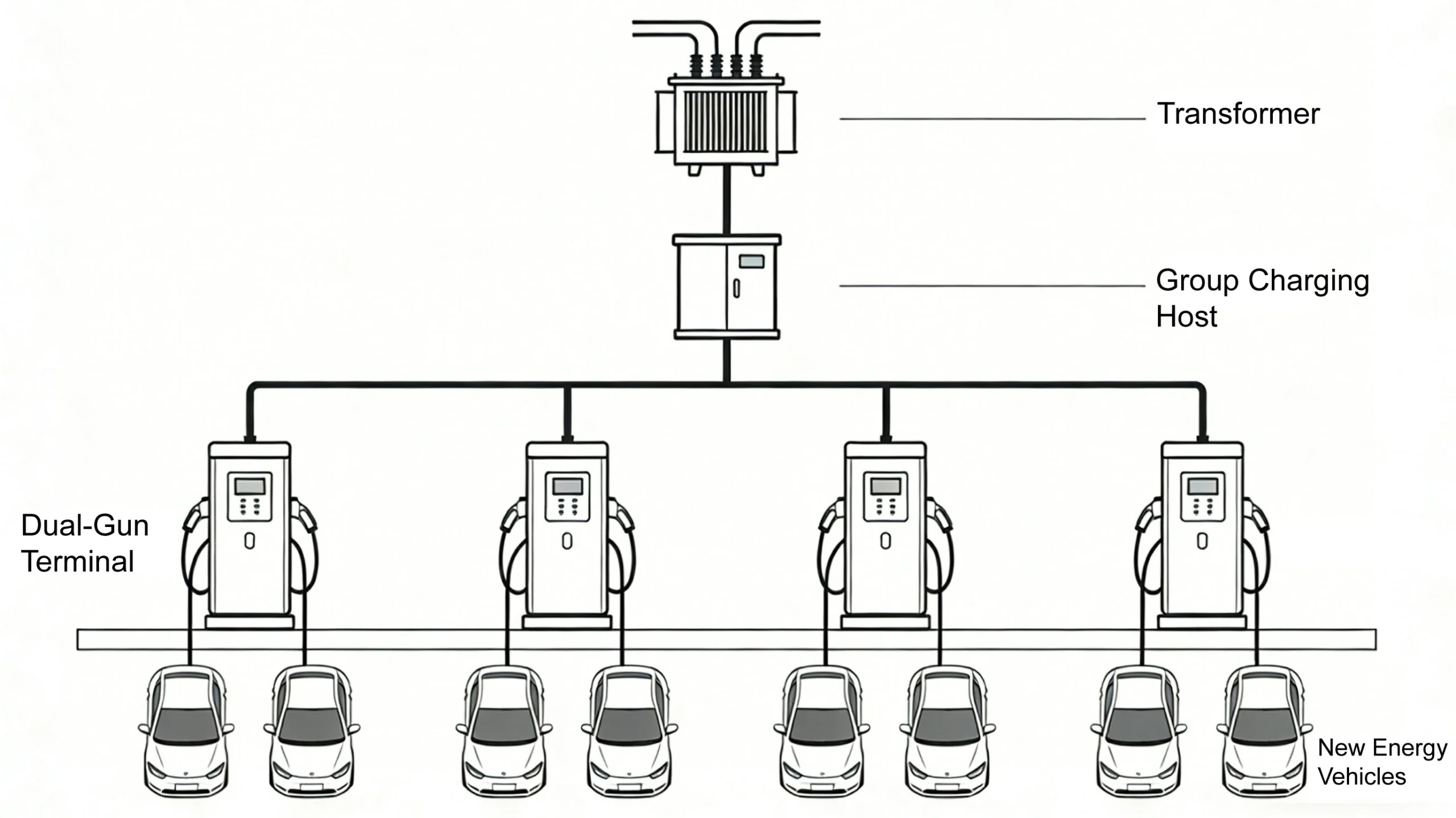
Distribute Current: If you have a 120kW station charging two vehicles, the protocol intelligently splits the power based on each car’s State of Charge (SoC).
-
Save Costs: Avoid high peak-demand charges from the utility company while keeping your station 100% operational.
4. Remote Diagnostics: Reducing O&M Costs by 40%
Maintenance is the silent profit-killer for commercial charging networks. Sending a technician to a remote site just to “reboot” a charger is a massive waste of resources.
With yd-evcharger’s OCPP 1.6J implementation:
-
Instant Error Codes: Receive precise diagnostic data (e.g., ground fault, over-temperature) instantly.
-
Remote Reset & Config: Fix up to 80% of minor software glitches via your dashboard.
-
OTA Updates: Deploy the latest features and security patches through Over-the-Air firmware updates without ever visiting the site.
5. Future-Proofing for 2026 and Beyond
While newer protocols like OCPP 2.0.1 are emerging, OCPP 1.6J remains the most widely supported and cost-effective solution for 95% of commercial applications. yd-evcharger ensures that our 1.6J implementations are robust enough to meet today’s security requirements (using TLS encryption) while maintaining the compatibility required for current global roaming networks.
Conclusion: Secure Your Infrastructure Investment
For a commercial charging network to be profitable, it must be flexible, smart, and easy to maintain. By choosing yd-evcharger’s OCPP 1.6J compliant solutions, you are not just buying a charger; you are investing in a future-proof asset.
Ready to upgrade your commercial charging fleet? > [Contact yd-evcharger Experts for a Technical Consultation →]
[Explore our OCPP-Compliant DC Fast Chargers at www.yd-evcharger.com]
FAQ
Q: Can yd-evcharger stations connect to any third-party software?
Yes. As long as the software is OCPP 1.6J compliant, our hardware can be integrated within minutes.
Q: Is OCPP 1.6J secure against cyber threats?
Absolutely. yd-evcharger implements security profiles that include TLS 1.2/1.3 encryption, ensuring that payment data and user information are transmitted through a secure tunnel.
Q: Does using OCPP 1.6J require a constant internet connection?
While a connection is needed for real-time monitoring and payments, yd-evcharger units have local memory to store transaction logs and continue charging even during temporary network outages.
Q: How do I manage multiple yd-evcharger units at one location?
Through an OCPP-based CMS, you can group multiple units and apply “Load Balancing” rules to the entire group, ensuring your site never exceeds its power limit.
Q: Can I upgrade my yd-evcharger from 1.6J to 2.0.1 in the future?
Our high-end DC stations are designed with future-ready controllers. Protocol upgrades can often be handled via firmware updates as your CMS provider begins to support the newer standards.