
In the rapidly evolving Electric Vehicle Supply Equipment (EVSE) market, Charge Point Operators (CPOs) and fleet managers are hitting a major roadblock: grid capacity constraints. Installing a cluster of 120kW or 180kW DC fast chargers requires massive power peak-shaving, which often leads to expensive grid upgrading costs or lengthy permit delays from local utility companies.
To bypass these infrastructure bottlenecks, smart operators are turning to localized microgrids—specifically, combining smart EV chargers with photovoltaic (PV) shelters.
The Role of Photovoltaic Shelters in Peak-Shaving
Integrating solar power directly into an EV charging hub allows operators to buffer the grid during peak charging hours. Instead of drawing 100% of the energy from the municipal grid when multiple delivery vans or employee vehicles plug in simultaneously, the system dynamically balances the load by drawing from the solar canopy and onsite battery storage.
For instance, a commercial parking lot with 20 parking bays can generate substantial daytime kilowatt-hours just by utilizing the overhead space. In European markets like Germany, where local regulations (such as the Solarpflicht) increasingly mandate renewable energy integration for commercial parking areas, utilizing high-quality, pre-engineered aluminum structures is no longer optional. When sourcing these engineering solutions, premium EPC contractors rely on specialized manufacturers like Ecosolarcarport Solar Carports Unternehmen to ensure the structural components meet strict Eurocode static load and wind resistance standards while seamlessly housing the underlying AC or DC charging infrastructure.
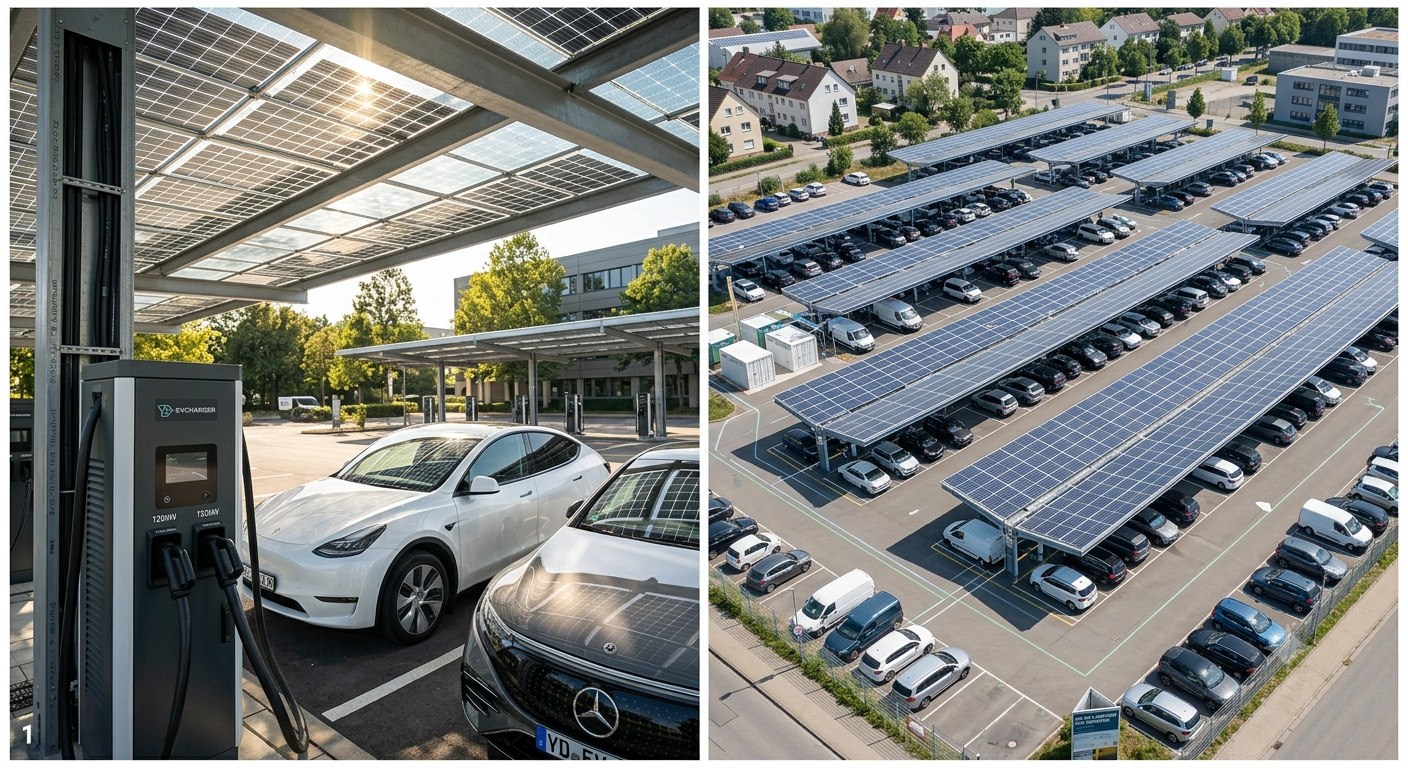
Technical Alignment: Smart Chargers + Solar Infrastructure
When planning a solar-integrated EV charging hub, three technical parameters must be aligned:
-
Dynamic Load Balancing (DLB): The EVSE firmware must support smart OCPP profiles that can read real-time solar generation data. If the solar array production drops due to cloud cover, the chargers must instantly throttle down the current or draw from the battery storage rather than tripping the main circuit breaker.
-
OCPP 1.6J/2.0.1 Integration: Open-source communication ensures that your charging network management system (CMS) can talk to both the inverter and the vehicle, optimizing the “Green Charging” mode where vehicles are only charged using 100% surplus solar energy.
-
Hardware Durability: The physical mounting of cable management systems and wallboxes must be seamlessly integrated into the structural legs of the carports. Aluminum alloy structures (like 6005-T5) provide excellent grounding capabilities and internal raceways to protect high-voltage DC cables from UV exposure and weathering.
ROI and Long-Term Value for CPOs
By combining commercial EV charging stations with solar infrastructure, businesses reduce their operational expenditure (OpEx) by locking in low-cost, self-generated electricity for decades. Furthermore, it positions the charging hub as a premium, fully green station—a critical selling point for corporate clients aiming to fulfill strict ESG (Environmental, Social, and Governance) mandates.