
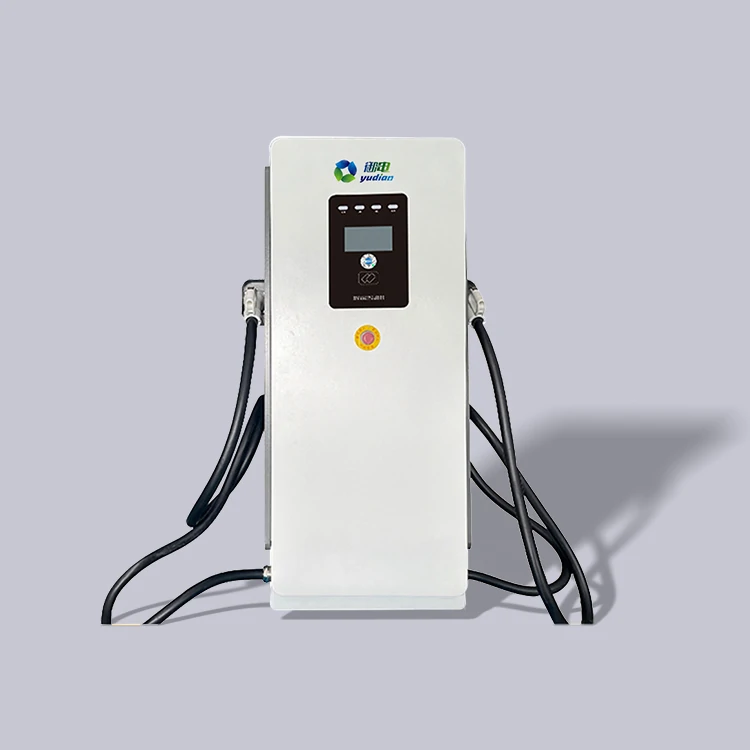
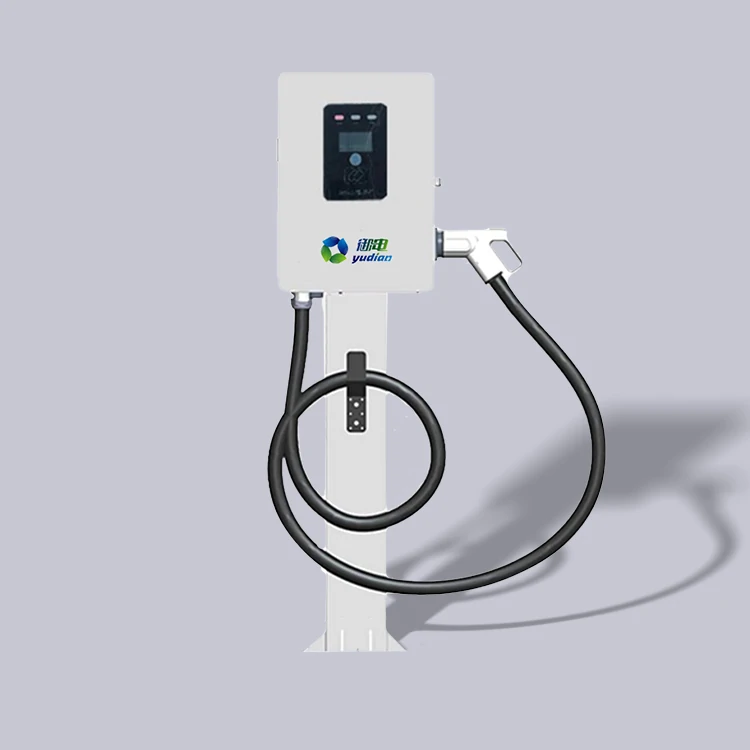
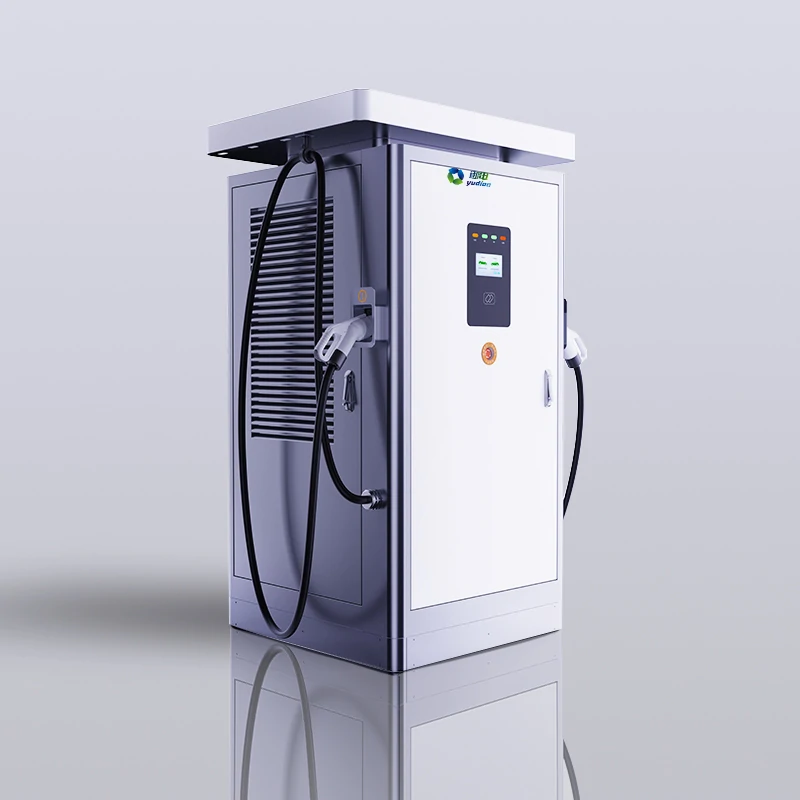
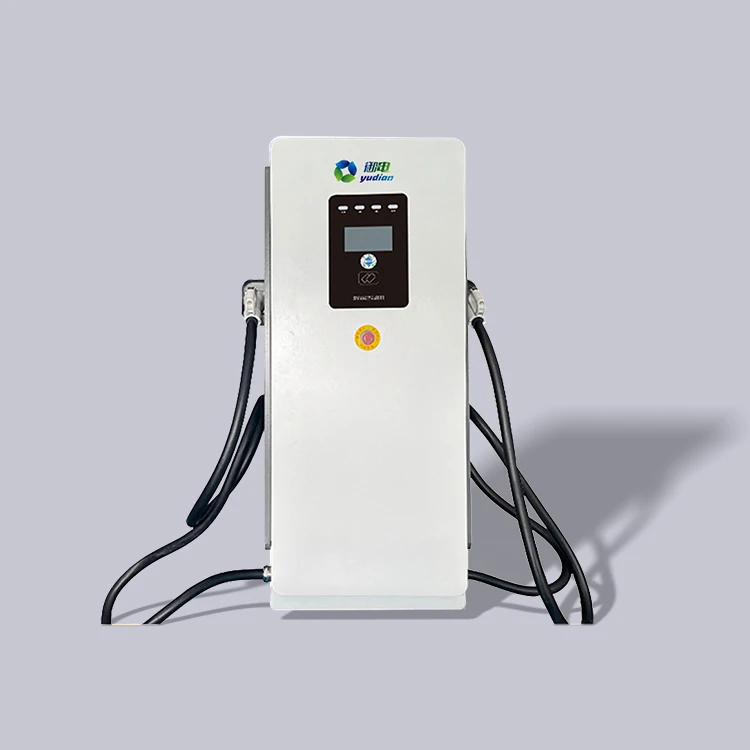
DC EV charger 30KW
Scope of Application
The DCP-D030Z electric vehicle DC fast charger is primarily designed for rapid charging of electric passenger vehicles. It is suitable for installation in EV charging and battery swap stations, public parking lots, residential community parking areas, large shopping mall parking facilities, and similar locations, providing DC power to the traction batteries of electric vehicles. Only electric vehicles equipped with an onboard Battery Management System (BMS) compliant with the GB/T 27930 standard and featuring a charging interface conforming to the GB/T 20234.3 standard are permitted to use this product for charging operations.
1 Summary
1.1 Model Designation
DCP: Stands for DC Fast Charger; this series features an integrated dual-gun DC charger.
D030: Indicates the charger’s rated output power.
1.2 Product Overview
The DCP-D030Z series DC fast charger for electric vehicles provides a national-standard-compliant charging interface and delivers safe, reliable charging services. It offers an excellent user experience and supports precise energy metering and billing, storage of charging records, payment settlement, and basic configuration capabilities for easy commissioning. The charger comprises six main functional units: AC distribution unit, power conversion unit, DC output unit, charging interface, charging control unit, and user terminal.
Operating Environment
1) Ambient temperature: Operating range from –25 °C to +55 °C; storage temperature from –30 °C to +70 °C;
2) Altitude: ≤ 2000 m above sea level;
3) Relative humidity: 5% to 95%, non-condensing;
4) Installation orientation: Vertically mounted, with a maximum tilt angle of no more than 5°;
5) The installation site must be protected against wind, sand, rain, and snow, and located in an environment free of corrosive or explosive gases;
6) The site must not be subject to severe vibration or mechanical shock.
1.3 Performance Specifications
Performance parameters of the DCP-D030Z electric vehicle DC fast charger
| Project | Technical indicators | |
|---|---|---|
| Product model specifications | DCP-D030Z | |
| Input characteristics | Input Voltage | AC380V(1±15%) Three-phase five-wire |
| AC frequency | 50±1Hz | |
| Power Factor | ≥ 0.98 | |
| Current harmonic distortion | THDi ≤ 5% | |
| Full load efficiency | ≥ 96% | |
| Output characterlstics | Rated output power | 30kW |
| Output voltage range | DC200-1000V | |
| Output current range | Single circuit: O-100A | |
| Current limiting adjustment range | 20%~100% Rating | |
| Voltage stabilization accuracy | ≤ ±0.5% | |
| Steady flow accuracy | ≤ ±1%(Current range 20%-100% load) | |
| Ripple factor | Effective value coefficient:≤ 0.5% | |
| Protection features | Input over-voltage protection | When the input voltage is higher than the over-voltage protection setting value, the charger can automatically protect |
| Input under-voltage protection | When the input voltage is lower than the under-voltage protection setting value, the charger can automatically protect | |
| Output over-voltage protection | When the output voltage exceeds the over-voltage setting value, the charger can automatically protect | |
| Output short circuit protection | When the output is short-circuited, the charger can automatically protect itself and automatically recover when the fault point is removed. | |
| Over temperature protection | When the internal temperature of the charger exceeds theover-temperature setting value, the charger can automatically protect | |
| Communication protection | Shutdown of electric vehicle communication failure | |
| Human Machine Interface | Status indicator | Displays standby, charging and fault status |
| Human machine operation unit | Equipped with 4.3-inch LCD touch screen: display charging information, battery information, human-machine operation interface | |
| Others | Vehicle Auxiliary Power Supply Specifications | DC 12V/10A |
| Operating ambient temperature | -25℃ - +55℃ | |
| Cooling method | Forced air cooling | |
| Acoustic noise | ≤80dB | |
| Protection level | IP54 | |
| Size (mm) | 30KW:690(Height)*492(Width)*183.5 (Depth)(Wall-mounted) 1568(Height)*492(Width)*263.5 (Depth)(Column-mounted) |
|
2.1 Basic Functions
1) The charger can charge one or more types of batteries including lithium-ion batteries, nickel-metal hydride batteries, and lead-acid batteries, suitable for common electric vehicle models;
2) The human-machine interface adopts a full touchscreen operation method, offering convenient and quick operations. The charger also features operational status indication through lights on the top of the charger for easy observation of its running status;
3) It includes functions such as card swipe encryption, metering and billing, communication with backend systems, and communication with electric vehicles.
2.2 Safety Protection Functions
1) The charging equipment is equipped with protection against input overvoltage, input undervoltage, output overvoltage, output short circuit, and overheating of the charger. In case of a fault, the charger can automatically cut off the output and provide an alarm notification to ensure comprehensive safety during charging;
2) It has functions like isolation of the output circuit from the grid, insulation detection, residual voltage discharge, connection confirmation, polarity detection, and communication interruption protection to ensure the safety of equipment and personnel during charging;
3) An emergency stop switch is available on the charger to quickly cut off power in case of an emergency, stopping the charging process;
4) The charger communicates with the vehicle’s BMS system, monitoring the charging status of the traction battery in real-time. Upon detecting faults such as overcharging, excessively high temperatures, or reverse polarity, it can immediately stop charging to ensure the safety of vehicle equipment and batteries;
5) Clear status indicators and text prompts are provided to prevent operator errors;
6) Charging only starts after confirming correct connection between the charger and the vehicle’s traction battery system. If abnormal connections are detected, the charger stops charging, disconnects the DC output circuit, and unlocks the electronic lock to ensure the vehicle does not start before being disconnected properly.
2.3 Metering and Consumption Functions
1) Equipped with a DC watt-hour meter, the charger has the function of metering the charged energy;
2) By entering time-of-use electricity information, internal conversion for billing purposes is achieved, completing the collection and settlement of charging fees;
3) Supports consumption settlement via charging cards, QR code scanning, etc., but card swiping is generally reserved for maintenance personnel for facility maintenance and temporary activation rather than customer use.
2.4 Communication Functions
1) The charger can communicate with the electric vehicle’s battery management system (BMS) to determine if it is correctly connected to the vehicle’s battery system and obtain charging parameters and real-time data;
2) It also communicates with upper-level monitoring systems, uploading information such as energy consumption, fees, and IC card details to remote monitoring while receiving controls from remote monitoring.
2.5 Historical Record Functions
The charger has the ability to record site data in case of power failure, preventing loss of charging data. Mainly records include:
1) Names and start times of the most recent alarm events;
2) Names and start times of the most recent setting modification events and charging events.
Reviews
There are no reviews yet.