
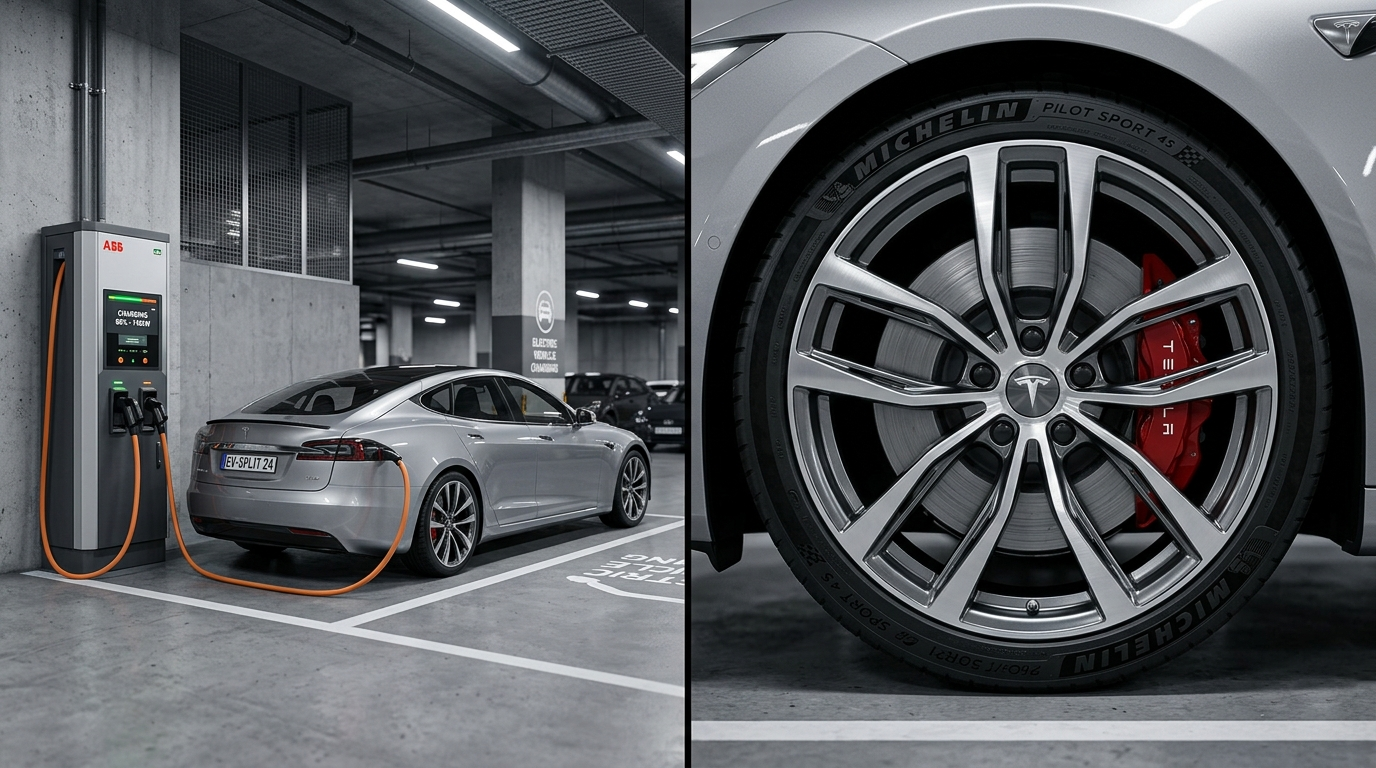
Most EV owners think about performance in pieces. They want faster charging. Or better range. Or a sportier feel through corners. What they rarely think about is how all of these things connect to each other — and what happens when you start treating them as a single system instead of separate problems.
an EV is not just a battery on wheels. It is a chain of energy transformations, and every link in that chain matters. Charging speed determines how quickly you replenish energy. The drivetrain determines how efficiently that energy becomes motion. And the wheels — specifically their weight — determine how much energy gets wasted every time that motion changes.
This article breaks down the full upgrade stack. Not as a shopping list, but as an engineering argument for why each layer compounds on the one before it.
Start With the Charger — Because Everything Flows From Here
Before any of the other upgrades make sense, you need to look at how your EV is taking on energy in the first place.
The difference between a standard Level 2 home charger and a high-power DC fast charger is not just speed. It affects how your battery thermal management system behaves, how deeply you typically charge, and how often you are starting a drive from a partial state of charge.
DC fast charging in the 60kW to 120kW range changes EV ownership at a practical level. You spend less time tethered to a charge point, which means you are more willing to use your vehicle dynamically — longer routes, spontaneous decisions, driving styles that actually engage the car. Research into extreme fast charging infrastructure confirms that charging behavior shifts substantially when high-power infrastructure is accessible: drivers charge more frequently for shorter durations, which keeps the battery operating in a healthier mid-range state of charge rather than cycling from near-empty to full.
What this means practically is that a well-chosen EV charger is not just a convenience tool. It is the foundation of how your vehicle operates day to day. Yudian’s range of DC fast chargers and smart AC chargers are built to handle exactly this kind of daily-use scenario — from home charging setups to higher-output installations for drivers who want the flexibility of fast replenishment on their schedule.
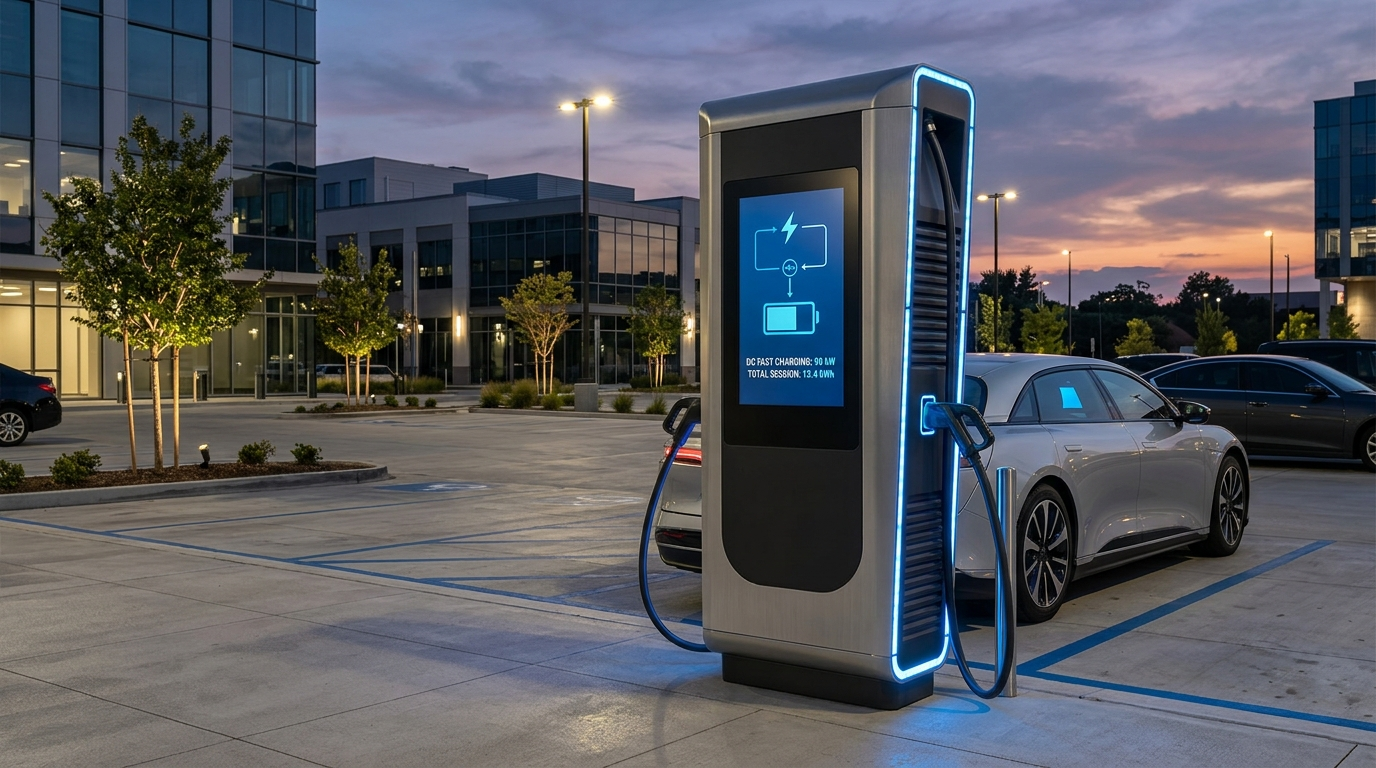
If you are serious about getting the most out of your EV, this is where you start.
The Drivetrain Is Already Optimized — Which Is Exactly the Point
Once you have fast, reliable charging sorted, the next thing to understand is that the EV drivetrain gives you almost nothing to complain about from the factory.
Electric motors paired with modern inverter systems routinely achieve efficiency figures that internal combustion engineers could only dream about. The battery pack stores energy in lithium-ion cells, the inverter converts DC power from the pack into AC for the motor, and the motor converts that into torque with very little loss along the way. The entire system — battery to wheel — operates in a window that no combustion drivetrain approaches.
Torque vectoring systems like GKN’s eTwinsterX take this further, distributing power between wheels independently to sharpen handling without sacrificing efficiency. This kind of system integrates an electric motor with torque-splitting capability in a compact eAxle format, enabling finer dynamic control than a traditional differential allows.
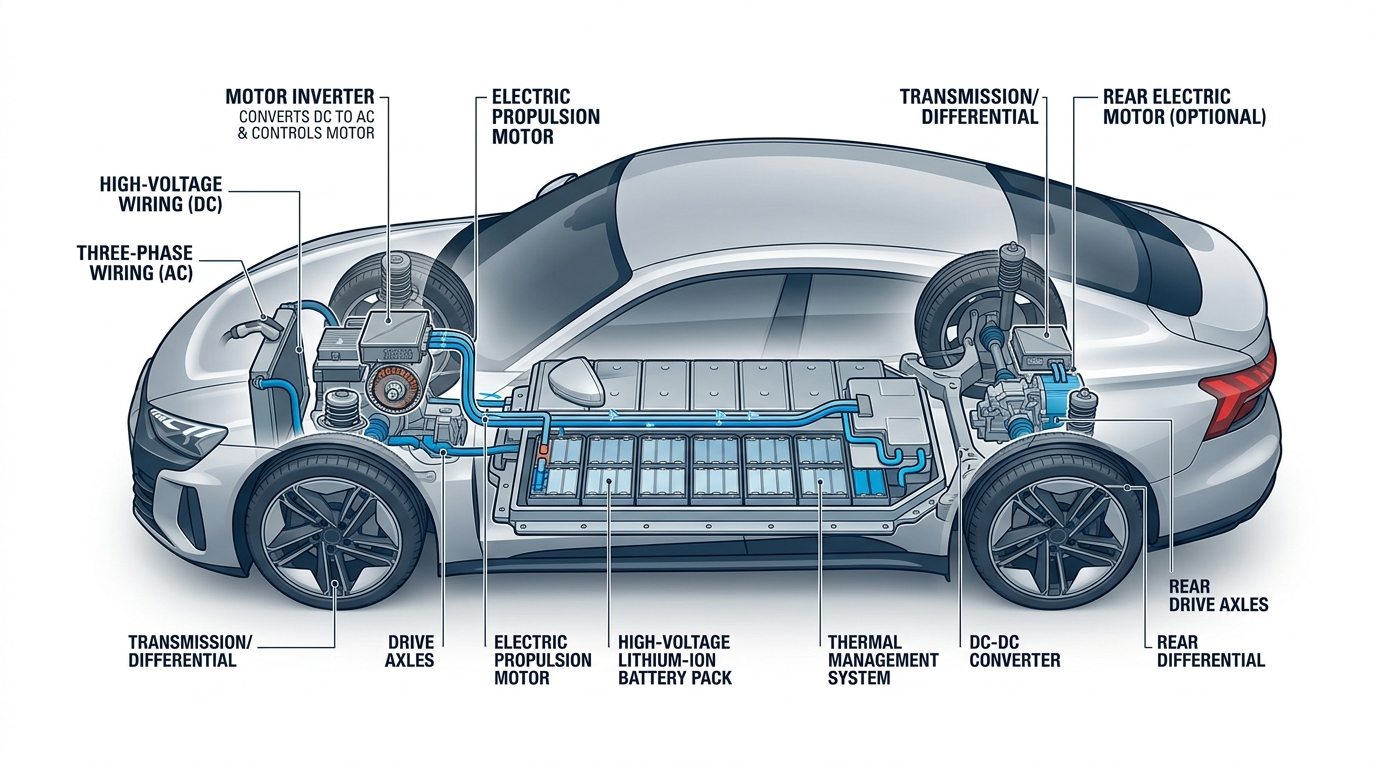
In-wheel motor architectures push the concept even further. Companies like Elaphe are targeting 95% battery-to-wheel efficiency by 2030 with their in-wheel motor designs, eliminating the mechanical losses that come from CV joints, gears, and additional bearings. The gains are real, even if the technology is still working its way into production vehicles.
The point here is not that you cannot improve the drivetrain. It is that the margin for improvement is narrow, and it exists mostly in the mechanical interfaces — not in the core electrical components. Which brings us to the part of the system where the margin is much wider.
The Wheel Weight Problem Nobody Talks About Enough
Here is where most EV performance conversations go quiet, because it requires thinking about physics rather than horsepower figures.
Every wheel on your vehicle is a rotating mass. And rotating mass behaves differently from static mass. The energy required to spin a wheel up to speed, and to slow it back down, scales with what engineers call rotational inertia — the resistance of a rotating object to changes in its rotational speed.
For an EV, this matters more than it does for an ICE car. Why? Because one of the core efficiency mechanisms in an EV is regenerative braking — the ability to convert deceleration energy back into charge. When you have heavy wheels, you are fighting their rotational inertia every time you accelerate, and recovering less of that energy every time you brake. The wheel weight is working against two of the EV’s biggest advantages simultaneously.
Unsprung mass — the total weight not supported by the suspension, which includes wheels, tires, hubs, and brakes — also has a direct effect on how the suspension tracks the road surface. Higher unsprung mass means the wheel responds more sluggishly to surface changes, which reduces mechanical grip and requires the chassis dynamics to compensate.
This is the gap that precision-engineered forged wheels close.
A wheel machined from aerospace-grade 6061-T6 aluminum billet through a 5-axis CNC process is structurally stronger than a cast wheel at a significantly lower weight. The forging process aligns the grain structure of the aluminum, producing a part that handles stress more efficiently — which is why the weight saving is achievable without compromising structural integrity.
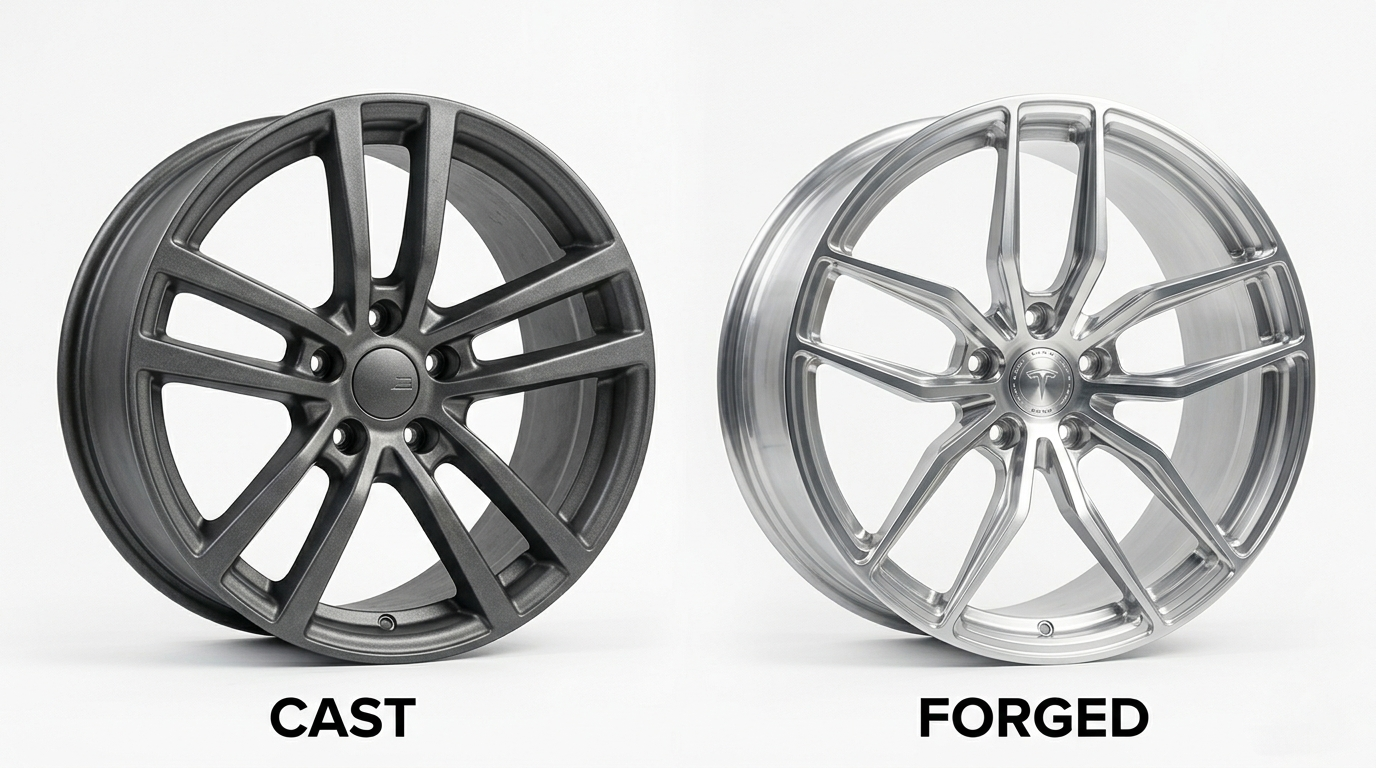
For EV owners, the practical result is a measurable reduction in rotational inertia per axle. That translates to quicker acceleration response from the motor, more effective regenerative braking recovery, and reduced unsprung mass that lets the suspension do its job properly.
RRT Forged manufactures precision forged wheels from 6061-T6 aluminum with 5-axis CNC machining, custom-fitted to exact vehicle specifications with zero spacers required. Their full wheel catalogue covers multiple series — from track-oriented builds to performance street applications — each engineered to reduce rotational inertia without asking you to compromise on finish or fitment.
This is where the upgrade stack starts to compound. A lighter, stiffer wheel does not just feel better. It makes the motor more responsive, the regen more effective, and the suspension more capable — all at once.
Battery Range and the Rolling Resistance Connection
There is one more link in the chain worth understanding before we put it all together.
Rolling resistance is the energy your motor spends just keeping the vehicle moving at a constant speed. It is determined by tire compound, contact patch, inflation pressure, and — critically — the weight pressing down on each tire from the wheel above it.
A heavier wheel increases the vertical load through the tire contact patch, which increases rolling resistance. Lighter wheels reduce this load, which reduces the energy the motor draws at a constant cruise. On a long motorway run, this effect is not dramatic per kilometer, but it accumulates. EV range figures are always a product of multiple small efficiencies, and wheel weight is one variable the driver actually controls.
This is also why serious EV efficiency discussions among engineers and enthusiasts consistently return to unsprung mass as a leverage point. It sits at the intersection of rolling resistance, regen efficiency, and suspension dynamics — three things that directly affect range and feel simultaneously.
What This Looks Like as a Complete Stack
Put it together and the logic becomes clear:
Layer 1 — Charging Infrastructure
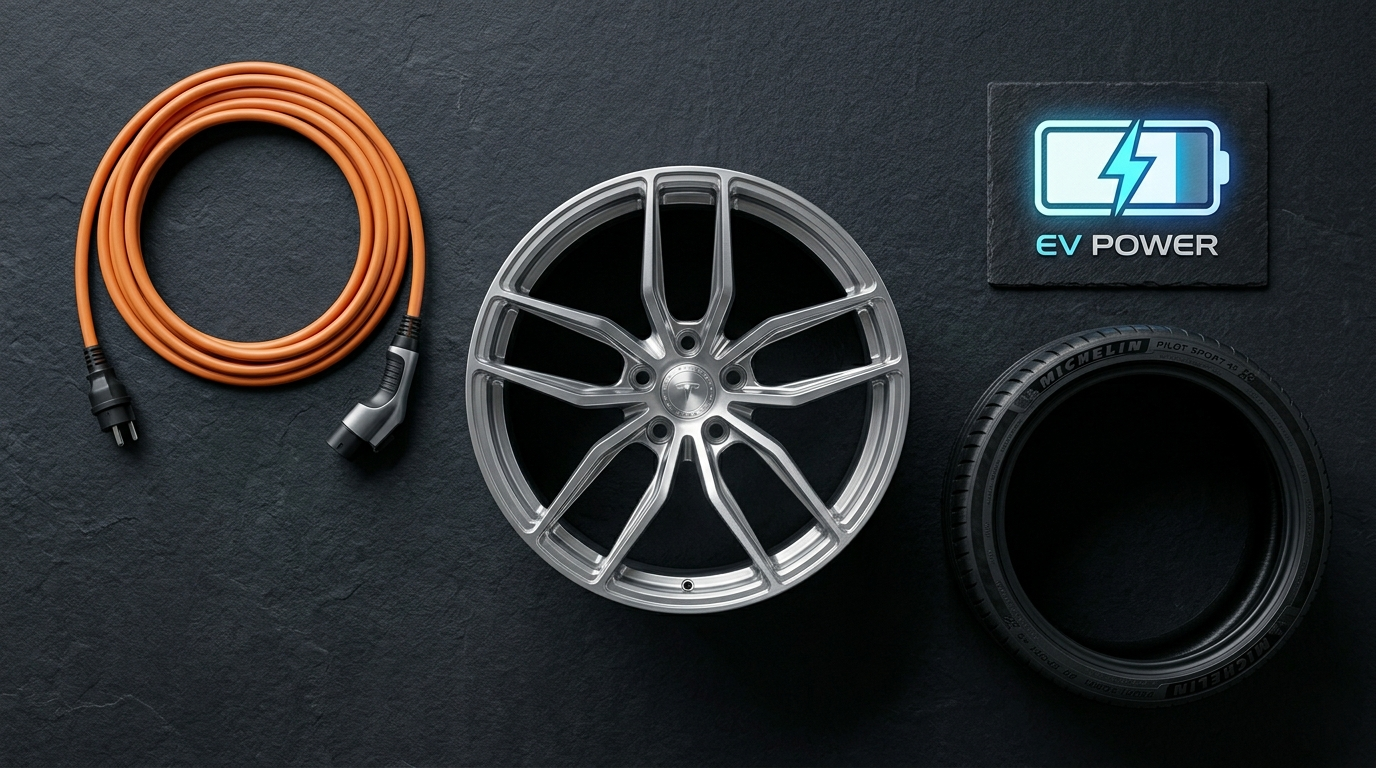
A high-output DC fast charger keeps your battery operating in a healthy charge range, reduces downtime, and gives you the freedom to drive your EV the way it was designed to be driven. Explore Yudian’s EV charger range for options from smart AC home units to high-power DC installations.
Layer 2 — Drivetrain Awareness
Understand what the factory drivetrain is already doing well. The motor and inverter are already highly efficient. Torque vectoring and in-wheel motor technologies represent the frontier of what is possible. Your job is not to fight the drivetrain — it is to stop robbing it of efficiency at the wheel interface.
Layer 3 — Wheel Engineering
Switch from cast to forged. The weight reduction per wheel is meaningful, the structural improvement is real, and the compound effect across acceleration, braking, and suspension behavior is measurable. RRT Forged’s wheel catalogue is purpose-built for this kind of application — each wheel custom-machined from 6061-T6 aluminum to your exact vehicle’s fitment spec.
The Honest Bottom Line
None of this is about chasing a spec sheet number. It is about understanding that an EV is an energy system, and every component in the system either contributes to or detracts from how efficiently that energy becomes useful motion.
Charging infrastructure sets the foundation. The drivetrain converts energy with minimal loss. The wheels are where the final mechanical efficiency either holds or breaks down — and they are the one part of the system you can upgrade without touching the powertrain at all.
Get the charger right. Understand the drivetrain. Then look at the wheels.
That is the full stack.